Have you ever bitten into a piece of dark chocolate and wondered where that rich, deep flavor actually comes from? The answer starts with something pretty remarkable: raw cacao powder.
If you’ve been scrolling through wellness blogs or health food stores lately, you’ve probably noticed this ingredient popping up everywhere. But what exactly is it, and why are so many people swapping it into their morning smoothies, ceremonial drinks, and baked goods?
In this guide, we’re going to break it all down for you in simple, easy-to-understand terms. You’ll learn what raw cacao powder actually is, how it differs from the regular cocoa powder sitting in your kitchen cabinet, and what makes it such a nutritional powerhouse. We’ll also explore its fascinating history as a ceremonial ingredient and give you practical ways to start using it in your own daily routine.
Whether you’re a total beginner or just cacao-curious, by the end of this post you’ll feel confident enough to pick up a bag and start experimenting. Let’s dive in.
What Is Raw Cacao Powder?
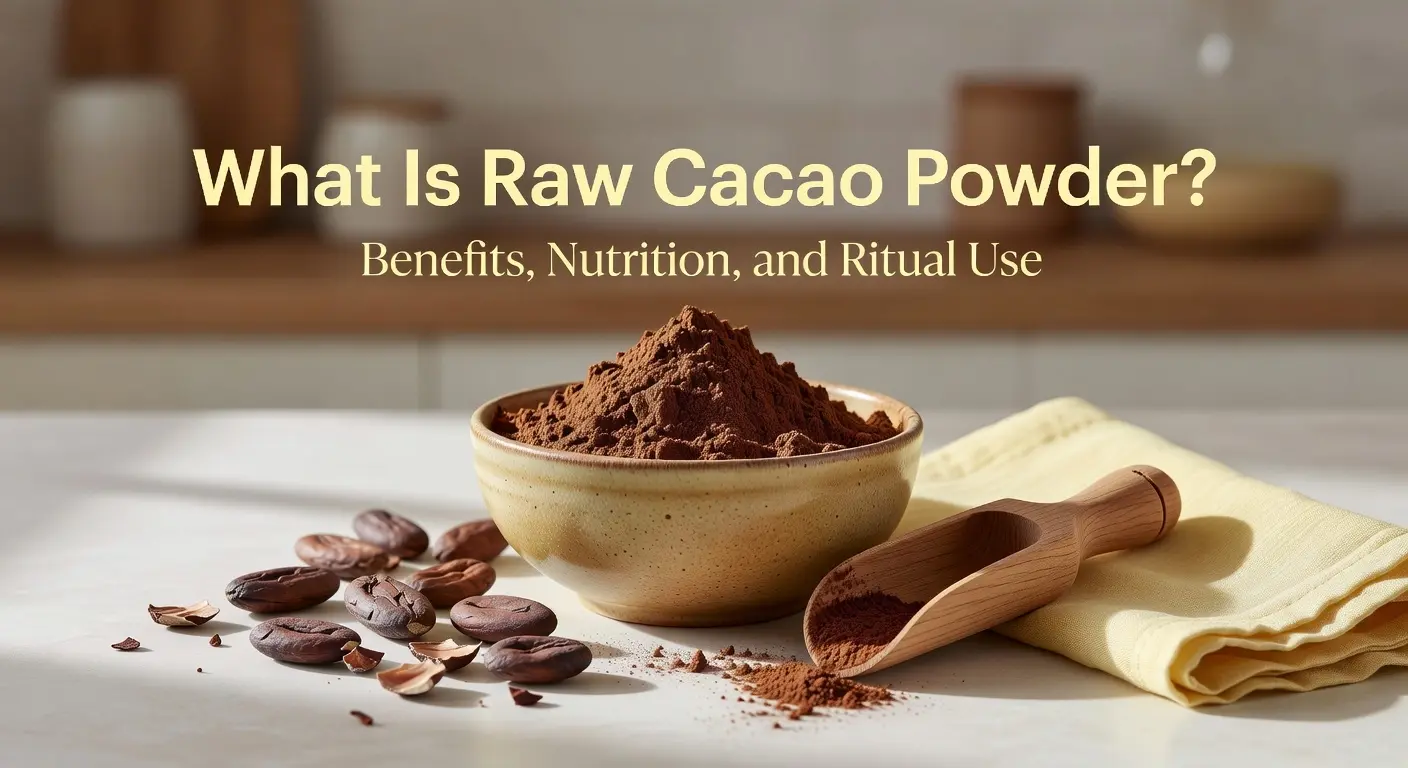
There is something quietly profound about a powder that carries thousands of years of history in every spoonful. Raw cacao powder is exactly that. At its most essential, it is a minimally processed ingredient made from the seeds of the Theobroma cacao tree, a name that translates beautifully from Greek as “food of the gods.” The beans are fermented, dried, and then cold-pressed at low temperatures to gently separate the natural cacao butter from the solid mass. What remains is a fine, deeply aromatic powder that holds onto its original nutrients, flavonoids, and plant compounds in a way that more heavily processed forms simply cannot.
Ancient Roots, Modern Ritual
Cacao has been revered for over 5,000 years. The ancient Olmec, Maya, and Aztec civilizations of Mesoamerica used it not as a sweet treat, but as a sacred ceremonial drink, a form of currency, and a spiritual offering. Frothy cacao beverages were prepared with intention and consumed during rituals, celebrations, and moments of deep community connection. That ceremonial spirit is very much alive today, woven into modern mindfulness practices, meditation circles, and functional wellness routines.
From Bean to Powder
The cold-pressing process is what sets raw cacao apart. After fermentation and drying, the beans are gently ground into a paste, then hydraulically pressed to extract the cacao butter. The remaining solids are dried and milled into the fine powder you might already have in your pantry. Because this happens at lower temperatures, heat-sensitive antioxidants and minerals like magnesium are largely preserved.
Conventional cocoa powder, by contrast, involves higher-temperature roasting and sometimes alkalization, which can significantly reduce the flavonoid content that makes cacao so nutritionally interesting. Raw cacao and cocoa come from the same bean, but how they are handled makes a meaningful difference in what ends up in your cup.
This is why raw cacao has become the foundation of modern ceremonial cacao blends and functional wellness drinks. It bridges ancient plant wisdom with today’s growing desire for intentional, nourishing daily rituals.
Raw Cacao vs. Cocoa Powder: What Is the Difference?
If you’ve ever stood in the grocery store aisle staring at both options and wondering whether the difference really matters, you’re not alone. The words “cacao” and “cocoa” look almost identical, but what happens between the harvest and your morning ritual changes everything.
How Conventional Cocoa Is Made
Conventional cocoa powder begins with the same cacao bean but takes a very different path. After fermentation and drying, the beans are roasted at high temperatures, typically between 250 and 350°F. That heat is what gives standard cocoa its familiar, smooth chocolate flavor. But it also breaks down something important: the heat-sensitive flavonoids, particularly epicatechin, that make cacao so nutritionally rich in the first place. By the time the beans are pressed and ground into powder, a significant portion of those bioactive compounds has already been lost.
What Dutch Processing Does to Your Cocoa
Many commercial cocoa powders take this one step further through a technique called Dutch processing, or alkalization. This process treats the cacao with an alkaline solution, typically potassium carbonate, to neutralize its natural acidity. The result is a darker, smoother, and more mellow-tasting powder that blends beautifully into baking and hot drinks. The trade-off, however, is significant. Research shows that light alkalization can destroy around 60% of cocoa’s natural antioxidants, while heavier processing can reduce polyphenol content by up to 90%. Of the three forms, Dutch-processed cocoa consistently ranks lowest in flavonoid content.
Why Raw Cacao Retains More
Raw cacao powder, processed at much lower temperatures without alkalization, preserves far more of those naturally occurring antioxidants and flavonoids. The difference in antioxidant capacity is striking: raw cacao powder measures approximately 95,500 ORAC units per 100g, compared to roughly 26,000 for standard cocoa powder.
Flavor and Ritual Quality
The flavor difference is equally noticeable. Raw cacao tastes bolder, more complex, and slightly bitter with earthy undertones. Conventional cocoa is softer, smoother, and more neutral. Neither is wrong, but for an intentional wellness ritual, that depth of flavor in raw cacao carries its own kind of presence. It asks you to slow down and taste something closer to the earth it came from. When processing method shapes both the nutritional value and the sensory experience, choosing minimally processed raw cacao becomes less of a health decision and more of a conscious, ritual one.
The Nutritional Profile of Raw Cacao Powder
When you scoop a serving of raw cacao powder into your morning ritual, you are adding far more nourishment to your cup than most people realize. A typical serving of around 20 to 28 grams (roughly two to three tablespoons) delivers approximately 72 calories, 5 grams of protein, 3 grams of fat, 16 grams of carbohydrates, 9 grams of fiber, and just 1 gram of sugar. That fiber content alone is something worth pausing on. For a powder stirred into a warm drink, that is a meaningful contribution to your daily digestive wellness, and it helps explain why cacao feels genuinely satisfying rather than empty.
Magnesium: The Mineral Worth Celebrating
One of the most remarkable things about raw cacao powder is its magnesium content. A single serving provides approximately 175mg of magnesium, which accounts for roughly 40% of the recommended daily value. Magnesium is one of those quiet, essential minerals that supports your nervous system, helps muscles relax after tension, and plays a role in over 300 enzymatic processes in the body. When you prepare a warm cacao drink as part of a grounding morning or evening ritual, you are not just enjoying a beautiful beverage. You are genuinely supporting your body’s ability to find calm. According to WebMD’s overview of cacao powder benefits, raw cacao ranks among the richest plant-based sources of this mineral available. For a deeper look at why magnesium in cacao stands apart, this detailed breakdown from Botanika Blends is well worth exploring.
A Full Spectrum of Plant-Based Minerals
Beyond magnesium, raw cacao brings an impressive range of additional minerals to the table. Iron supports healthy oxygen flow throughout the body. Potassium contributes to electrolyte balance. Zinc, copper, manganese, and phosphorus each play their own quiet roles in immune function, antioxidant defense, bone integrity, and energy metabolism. These minerals are preserved more effectively in raw cacao because minimal heat processing keeps the delicate nutrient structure largely intact.
Antioxidant Density That Stands Alone
Raw cacao is one of the most antioxidant-rich foods on the planet. Its ORAC (Oxygen Radical Absorbance Capacity) value sits around 95,000 to 98,000 per 100 grams, compared to roughly 2,400 per 100 grams for blueberries. That is approximately 40 times the antioxidant capacity of a food already celebrated as a superfood. These antioxidants, primarily flavonoids like epicatechin, help the body manage oxidative stress and support long-term vitality.
Think of your daily cacao ritual less as taking a supplement and more as an intentional act of nourishment. Each cup is an invitation to slow down, be present, and offer your body something genuinely rich with purpose.
Key Benefits of Adding Raw Cacao Powder to Your Wellness Routine
Now that you understand what raw cacao powder is and how it differs from conventional cocoa, it is worth exploring why so many wellness practitioners and mindful living enthusiasts are making it a daily ritual. The benefits are rooted in real nutritional science, and when you understand what is happening in your body with each serving, that morning cup starts to feel even more intentional.
Heart Health From the Inside Out
One of the most studied benefits of raw cacao powder involves its remarkable flavonoid content, particularly compounds called epicatechin and catechin. These plant-based molecules encourage your body to produce nitric oxide, a natural compound that helps blood vessels relax and expand. When your blood vessels are more relaxed, circulation improves and your cardiovascular system can function with greater ease. Research has even explored large-scale outcomes, with studies on cocoa flavanols suggesting meaningful support for heart health over time. Because raw cacao is minimally processed, it retains far more of these flavonoids than heavily roasted or alkalized alternatives, making each serving genuinely impactful.
Mood Support That Feels Grounding
There is a reason cacao has been used in ceremonial and communal settings for thousands of years. It contains tryptophan, a precursor to serotonin, along with phenylethylamine, a compound often associated with feelings of warmth and emotional openness. These naturally occurring molecules work gently alongside the magnesium and theobromine already present in cacao, creating a subtle sense of uplift that feels nourishing rather than jarring. Observational research has noted a connection between regular cacao consumption and lower rates of low mood in large adult populations. These are supportive effects rather than clinical treatments, but for anyone building a mindful morning ritual, that quiet emotional softness is something worth noticing.
Calm, Sustained Focus Without the Crash
Unlike caffeine, which can spike energy and then drop it sharply, theobromine offers a gentler kind of alertness. It stimulates the nervous system more slowly, supporting sustained attention and mental clarity without the jitters or mid-afternoon slump that many people experience with coffee. Research on cocoa’s bioactive compounds also points to improved cerebral blood flow as a contributing factor in focus and cognitive feel-good qualities. This is part of why raw cacao has become a beloved coffee alternative for wellness-focused individuals seeking creative clarity and grounded productivity.
Deep Antioxidant Protection
Raw cacao powder is one of the most antioxidant-dense foods available in plant form. Its polyphenols and flavonoids actively help neutralize free radicals, which are unstable molecules linked to oxidative stress and cellular wear over time. Because raw cacao skips the high-heat roasting process, its antioxidant compounds remain largely intact. Incorporating even a small daily serving gives your body a meaningful dose of protective plant intelligence.
Magnesium as Your Nervous System’s Best Friend
A single serving of raw cacao powder provides approximately 175mg of magnesium, covering over 40 percent of your daily needs in one ritual cup. Magnesium participates in more than 300 enzymatic processes in the body, including those that regulate nerve function, muscle relaxation, and your stress response. Many adults are quietly deficient in this mineral without realizing it. When your magnesium levels are supported, your nervous system has more resources to move through the day with resilience, ease, and a deeper sense of calm. Raw cacao delivers this mineral alongside a full spectrum of complementary compounds, making it one of the most layered and intentional additions you can bring into your wellness routine.
Raw Cacao Powder as a Gentle Coffee Alternative
If you have ever wished your morning cup could wake you up without leaving you wired, anxious, or crashing by midday, raw cacao powder might be exactly what you have been looking for.
The Science Behind Theobromine
The secret to cacao’s gentle energy lies in a compound called theobromine, the primary stimulant found in raw cacao. Unlike caffeine, which stimulates the central nervous system and can trigger cortisol and adrenaline spikes, theobromine works more like a soft, steady wave. It acts as a vasodilator, gently widening blood vessels to improve circulation and oxygen delivery throughout the body. The result is a longer, smoother lift that tends to last seven to twelve hours, compared to the sharper two-to-five-hour arc of caffeine. According to research on cacao’s caffeine and theobromine content, theobromine is present in ratios of roughly six to ten times higher than caffeine in cacao, making it the dominant driver of how cacao actually feels in your body.
Sustained Focus Without the Crash
Raw cacao creates what some researchers describe as an “entourage effect.” The theobromine, trace caffeine, natural cacao butter, magnesium, and mood-supportive compounds like anandamide and phenylethylamine all work together synergistically. The natural fats slow absorption, creating something closer to a time-release energy experience rather than an immediate jolt. Many people describe the feeling as calm mental clarity, a gentle opening of focus that supports creative work, deep thinking, or intentional presence without the edge of overstimulation. As cacao insights on its role as a coffee alternative note, this makes cacao particularly well-suited for mindfulness-oriented mornings where groundedness matters more than speed.
A Morning Ritual Worth Waking Up For
Warming a cup of raw cacao powder into a rich, earthy elixir is itself an act of intention. The slow preparation, the aroma, the first sip taken without rushing, these small moments build a morning ritual that centers you before the day begins. Rather than chasing a spike of alertness, you are inviting grounded wakefulness and emotional steadiness. It is a shift that resonates deeply with the 2026 wellness movement toward plant-based stimulant alternatives, which Forbes and other wellness publications have highlighted as one of the defining consumer trends of the year, driven by a growing desire to support the nervous system rather than overload it.
A Mindful Note on Caffeine Sensitivity
Raw cacao is not entirely caffeine-free, and that is worth knowing before you pour your first cup. A typical serving of raw cacao powder contains roughly twelve to twenty milligrams of caffeine per tablespoon, lower than coffee but still present. If you are sensitive to caffeine, experience anxiety, have sleep challenges, or are pregnant, it is wise to start with a smaller amount, perhaps half a tablespoon, and observe how your body responds. Enjoying it earlier in the day and pairing it with food can also support gentler absorption. As with any wellness practice, listening to your body is the most important ingredient.
How to Use Raw Cacao Powder in Your Daily Ritual
Think of your first cacao ritual as less of a recipe and more of an invitation. An invitation to slow down, to arrive in your body, and to begin something nourishing. The preparation itself is simple, and that simplicity is part of the beauty.
Your Foundational Cacao Preparation
Start here, especially if you are new to working with raw cacao powder. Gently warm your liquid of choice, whether that is filtered water, oat milk, almond milk, or coconut milk, to around 70 to 80°C (roughly 158 to 176°F). You want it warm enough to dissolve the powder fully, but not boiling, since high heat can degrade some of cacao’s more delicate nutrients and enzymes.
Add one to two tablespoons of raw cacao powder to your mug. Pour in about 8 to 10 ounces of your warm liquid and whisk vigorously until the mixture is smooth and slightly frothy. A handheld milk frother works beautifully here. Sweeten naturally with a drizzle of maple syrup, a teaspoon of raw honey, or a few drops of liquid stevia. A pinch of sea salt and a small splash of vanilla extract will round out the flavour in a way that feels genuinely luxurious.
Functional Elixir Upgrades
Once you feel comfortable with the base recipe, you can begin layering in functional botanicals that align with your intention for the day. In the morning, try whisking in half a teaspoon of lion’s mane mushroom powder alongside your cacao. Lion’s mane is widely used in functional wellness circles for its association with mental clarity and sustained focus, making it a natural companion for creative work or deep concentration.
In the evening, consider swapping lion’s mane for reishi mushroom powder. Reishi is favoured in adaptogenic traditions for its calming, grounding quality, and it pairs gently with cacao’s natural theobromine to create a deeply settling wind-down drink. Start with a small amount of any mushroom powder, around a quarter to half a teaspoon, as the earthy flavour can be quite pronounced at first.
Grounding Adaptogenic Hot Chocolate Recipe
This evening elixir has become a beloved ritual for many in the wellness community. Combine one tablespoon of raw cacao powder, half a teaspoon of ashwagandha powder, a quarter teaspoon of ground cinnamon, and your natural sweetener of choice in a mug. Warm 8 to 10 ounces of oat milk gently, then pour it over your blend and whisk or froth until silky and smooth. Optionally, stir in a teaspoon of coconut butter for extra richness. The result is a grounding, low-caffeine alternative to hot chocolate that supports your nervous system rather than overstimulating it.
Weaving Cacao Into Everyday Plant-Based Eating
Raw cacao powder is wonderfully versatile beyond drinks. Stir one to two teaspoons into your overnight oats along with chia seeds, plant milk, and a touch of maple syrup before refrigerating. Blend two tablespoons into a smoothie with frozen banana, almond butter, and oat milk for something that tastes indulgent but fuels your body with real nourishment. For a portable snack, process dates, almonds, oats, raw cacao powder, and a pinch of salt in a food processor, then roll into energy balls and chill for an hour.
You can explore more ideas for building a ceremonial cacao preparation and daily ritual into your existing wellness routines.
The Ritual Mindset
Whatever form your cacao practice takes, the most transformative ingredient is intention. Before you take your first sip, pause. Hold the warm mug in both hands, close your eyes, and take three slow breaths. Set one small, honest intention for the moment ahead. It does not need to be elaborate. Something as simple as “I choose to be present today” is enough. This brief act of mindfulness shifts cacao from a beverage into a ritual, one that quietly anchors your day in groundedness and self-awareness.
Bringing Intention to Your Cacao Practice: A Simple Ritual Guide
There is a meaningful difference between making a cup of cacao and actually being present for it. The ingredients can be identical. The preparation steps can look the same from the outside. But what transforms a functional morning drink into something genuinely nourishing is the quality of attention you bring to it. Ceremonial cacao is not defined by a special recipe or an exotic ingredient list. It is defined by you, by the slowness, the stillness, and the quiet intention you carry into each step of the process.
Functional vs. Ceremonial: The Inner Difference
A functional approach to cacao is perfectly valid. You add it to a smoothie, stir it into oatmeal, or blend it quickly before heading out the door. You receive the nutrients. You feel the gentle lift. But the experience begins and ends in about ninety seconds. A ceremonial approach asks something different of you. It asks you to pause, to arrive, and to treat the preparation itself as a form of practice. The shift is internal, not external. When you bring full presence to something as simple as measuring, warming, and stirring, the act becomes meditation.
A Beginner-Friendly Cacao Ritual, Step by Step
Start by choosing a quiet space where you will not be interrupted. Set your phone aside. If it helps you settle, light a candle or place a small object nearby that feels grounding to you. Gather your ingredients with care: your raw cacao powder, warm water or plant-based milk heated to around 150 to 170°F (not boiling, to protect the delicate compounds), and any optional spices like cinnamon, cardamom, or a small pinch of cayenne. Measure slowly. Whisk or blend the powder into the liquid until it becomes smooth and faintly frothy, paying attention to the rich, earthy aroma rising toward you.
Once your cup is ready, hold it in both hands. Close your eyes, take three slow breaths, and set a simple intention before your first sip. It does not need to be elaborate. Something like “I am here” or “I am open to clarity today” is enough. Then drink slowly, without multitasking, letting yourself notice the warmth, the bitterness, the texture, and how your body responds.
Deepening the Experience
Pairing your cacao ritual with one additional practice can shift it from pleasant to genuinely transformative. Breathwork before or during the ritual helps settle the nervous system and creates a natural entry point into presence. Try inhaling for four counts and exhaling for six, repeating several rounds before your first sip. Journaling afterward, even just five minutes of freewriting, helps integrate whatever surfaces emotionally. A short body scan, moving awareness slowly from your feet upward, works beautifully as the warmth of the cacao settles in. Even a five-minute seated meditation focused on the heart center can leave you feeling more grounded and clear than a full hour of scrolling ever could.
Why Ceremonial Grade Matters
Ceremonial cacao grade refers to products that prioritize purity, minimal processing, and single-origin sourcing. Unlike commercial cocoa powders that are heavily defatted and often alkalized, ceremonial-grade raw cacao retains its natural cacao butter, its full flavonoid content, and the nuanced flavor complexity of its origin region. Sourcing from specific farms in places like Peru, Guatemala, or Ecuador adds traceability and integrity to your practice. When the quality of the ingredient is higher, the experience of the ritual tends to feel more potent, more aromatic, and more satisfying.
For those ready to move from casual exploration into a more intentional daily practice, Soulcybin’s ceremonial cacao blends offer a premium place to begin. Crafted with this same reverence for sourcing, purity, and ritual, they are designed to support the kind of slow, heart-centered mornings that actually change how you feel from the inside out.
What to Look for When Choosing a Quality Raw Cacao Powder
Not all raw cacao powders are created equal, and once you start paying attention to what is actually on the label, the differences become surprisingly meaningful. Choosing well means your daily ritual delivers everything it promises, from rich flavor to genuine nourishment.
Where It Comes From Matters
Start with sourcing. Cacao grown in regions like Peru, Ecuador, and Guatemala tends to come from small farms or cooperatives with deep roots in traditional cultivation methods. Single-origin cacao, meaning it comes from one specific region or farming community rather than a blend of commodity beans, offers traceability you can actually trust. Look for brands that share the farm or cooperative name, the harvest region, and how they work with the farmers who grow it. Transparency here is a good sign. Vague sourcing information is worth questioning.
Certifications Worth Trusting
At minimum, look for organic, fair-trade, and non-GMO certifications on the label. Organic ensures the cacao was grown without synthetic pesticides, which matters both for your health and for the soil it was grown in. Fair-trade certification tells you the farmers were compensated ethically. These are not just buzzwords; they are markers of a supply chain that someone has actually verified. Bonus points for brands that go further with third-party lab testing or direct-trade relationships.
How It Is Processed
This is where raw cacao powder earns its name. Cold-pressed and minimally processed cacao retains significantly more flavonoids and antioxidants than conventional cocoa, which is often roasted at high heat or treated with alkalization. Look for labels that specifically say “raw,” “cold-pressed,” or “minimally processed,” and check that no additives, fillers, or artificial flavors have been included. The ingredient list should be short, ideally just one ingredient.
Grade and Packaging
Ceremonial-grade cacao prioritizes purity, whole-bean integrity, and ritual potency, while standard raw cacao powder is more suited for everyday use in recipes and smoothies. Both have their place, but knowing the difference helps you choose with intention. Finally, pay attention to packaging. Airtight, opaque containers protect the powder from light, heat, and moisture, all of which degrade its nutritional complexity and aroma over time. A thoughtfully packaged product is a quiet signal that the brand genuinely cares about what reaches you.
Safety, Moderation, and Who Should Be Mindful
Raw cacao is a genuinely nourishing daily practice for most people, and like any good thing, it works best when approached with a little awareness and self-honesty.
Theobromine and caffeine are both naturally present in raw cacao powder. Theobromine is the dominant stimulant, delivering that gentle, sustained lift that makes cacao such a beloved coffee alternative. Caffeine is present too, though in smaller amounts, roughly 12 milligrams per tablespoon. Together, they create a mild stimulating effect. For most people, this feels calm and grounding. For those who are sensitive to stimulants, have anxiety, or are managing a heart condition, it is worth being mindful and listening closely to how your body responds.
If you are new to raw cacao, starting smaller is the wisest move. A beginning serving of around 10 to 15 grams gives your system a chance to acclimate before you build toward a full ritual dose of 20 to 28 grams. There is no rush. Think of it as getting to know a new plant ally, slowly and with curiosity rather than urgency.
For those who are in their third trimester of pregnancy, it is worth having a conversation with your healthcare provider before making raw cacao a regular part of your routine. Research suggests that certain compounds in cacao may warrant caution during late pregnancy, and personalized professional guidance matters here.
If you track your caloric intake, it helps to know that a standard serving contains around 72 calories. Those calories come loaded with fiber, magnesium, plant-based protein, and polyphenols. These are deeply nourishing calories, not empty ones.
For most healthy adults, raw cacao consumed mindfully and in reasonable amounts is a genuinely beautiful daily ritual worth settling into.
Frequently Asked Questions About Raw Cacao Powder
Is raw cacao powder the same as cocoa powder?
Not quite. Both come from the same cacao bean, but the way they are processed makes a real difference. Raw cacao powder is made by cold-pressing minimally processed beans, which helps preserve fragile antioxidants and flavonoids. Conventional cocoa powder is roasted at high temperatures, and Dutch-processed cocoa is further treated with alkali, which can destroy 60 percent or more of its natural antioxidant content. If you are reaching for raw cacao specifically for its nutritional depth, that distinction genuinely matters.
How much raw cacao powder should I use per day?
A good beginner starting point is one teaspoon, giving your body a chance to adjust to the natural theobromine content. From there, most people settle comfortably into one to two tablespoons per day, roughly 10 to 15 grams. Healthy adults can work up to around 30 grams without concern, though sensitivity varies. If you notice restlessness, digestive discomfort, or disrupted sleep, simply scale back. When in doubt, a conversation with your healthcare provider will always give you the most personalized guidance.
Can raw cacao powder help with energy and focus?
Many people notice a calm, grounded alertness after their morning cacao ritual, and the plant chemistry offers some clues as to why. Raw cacao contains theobromine, a gentle stimulant that tends to produce softer, longer-lasting energy compared to caffeine. It also contains tryptophan, a natural precursor to serotonin, along with phenylethylamine, a compound often associated with mood and motivation. These are not clinical treatments, and individual experiences vary widely, but cacao’s reputation as a functional focus beverage is rooted in real plant biology.
What is the difference between raw cacao powder and ceremonial cacao?
Raw cacao powder is defatted, finely ground, and highly versatile for everyday use in smoothies, elixirs, and baking. Ceremonial cacao is a whole-bean product, typically a paste or block that retains the full cacao butter. It is held to stricter standards around purity, single-origin sourcing, and ethical harvesting, and it carries intentional ritual significance. Think of raw cacao powder as your daily functional ingredient and ceremonial cacao as a more sacred, immersive practice.
Can I use raw cacao powder in coffee or as a coffee replacement?
Absolutely, and it pairs beautifully both ways. Stir one to two tablespoons into brewed coffee for a rich, mocha-like depth. Add cinnamon, vanilla, or a pinch of sea salt to round out the flavor. For a full coffee alternative, blend cacao powder with warm plant milk, a natural sweetener like maple syrup, and warming spices such as cardamom or ginger. You can even brew it in a French press for a smoother, gentler morning cup that supports energy without the familiar jitters.
Is raw cacao powder good for magnesium intake?
It genuinely contributes. Raw cacao powder contains roughly 499 mg of magnesium per 100 grams, meaning a generous two-tablespoon serving can offer somewhere between 50 and 175 mg depending on portion size. The adult daily recommendation sits between 310 and 420 mg, so cacao alone will not cover your full needs, but it adds meaningful support alongside other magnesium-rich foods like leafy greens, pumpkin seeds, and almonds. It is a delicious way to close nutritional gaps within a balanced, plant-forward routine.
What does raw cacao powder taste like, and how do I make it taste better?
Raw cacao has an intense, earthy bitterness that can surprise first-timers expecting something sweeter. The minimal processing means the flavor is bold and complex, almost like very dark chocolate without the sweetness. To soften that edge, blend it with plant milk for creaminess, sweeten with dates, honey, or maple syrup, and add warming spices like cinnamon or nutmeg. Banana smoothies are a beginner favorite because the natural sweetness perfectly balances cacao’s depth. Starting with a small amount and building gradually makes the transition feel effortless.
Your Invitation to a Daily Cacao Ritual
You have arrived. And that, in itself, is something worth honoring.
Raw cacao powder is more than a superfood ingredient. It is a doorway into something quieter and more intentional. Nutritionally rich, minimally processed, and deeply aligned with the rhythms of modern wellness, it carries within it both ancient wisdom and a genuinely nourishing daily practice.
But perhaps the most meaningful thing cacao offers is not found on a nutrition label. It is found in the ritual itself. In the warmth of the mug between your palms. In the earthy, grounding aroma that rises to meet you before the first sip. In the quiet moment of presence you carve out, just for yourself, before the day asks everything of you.
If raw cacao powder has sparked something in you, ceremonial-grade cacao is a beautiful next step. Richer, more whole, and steeped in tradition, it deepens the experience in ways that feel genuinely transformative.
Soulcybin’s ceremonial cacao blends and functional elixirs are crafted for exactly this kind of intentional practice. Explore them when you feel ready.
Conclusion
Raw cacao powder is far more than just a chocolate flavoring. It is a nutrient-dense superfood with centuries of ceremonial history, a remarkable nutritional profile, and genuine wellness benefits that modern science continues to validate.
Here are your key takeaways: raw cacao differs significantly from processed cocoa powder; it delivers powerful antioxidants, magnesium, and mood-supporting compounds; and it carries a rich cultural legacy worth honoring in how you use it.
Now it is your turn to experience it firsthand. Start simple. Add a tablespoon to your morning smoothie, stir it into oatmeal, or brew a warming ceremonial cup. Let your body feel the difference.
The ancient cultures who revered cacao as a sacred gift were onto something. You have every tool you need to bring that wisdom into your modern life, one mindful sip at a time.